
Manual vs AI Video Editing: Time and Cost Comparison
AI editing lowers cost most reliably in search, transcription, candidate generation, captions, reframing, cleanup, and repeated versions. Manual editing remai
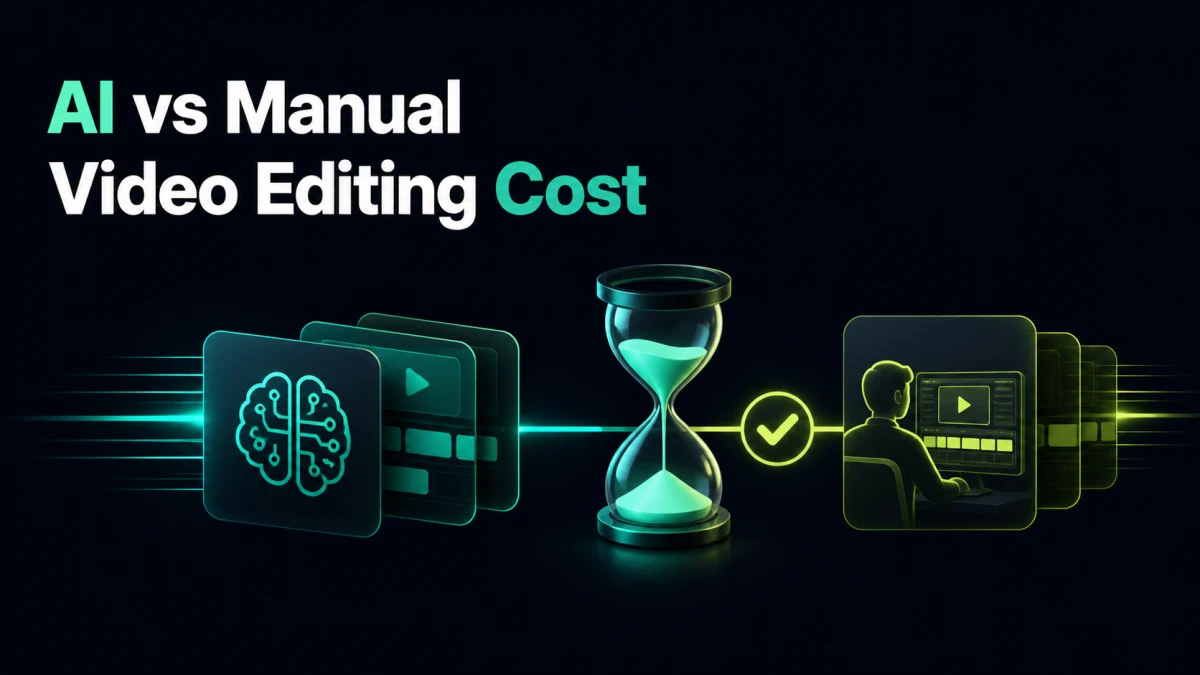
AI editing lowers cost most reliably in search, transcription, candidate generation, captions, reframing, cleanup, and repeated versions. Manual editing remains valuable for narrative judgment, complex finishing, rights, and exceptions. Compare total cost per approved asset, not the price or speed of the first draft.
The buying or workflow question is not “Can AI make an edit?” A useful system must help a team produce a correct, rights-cleared, audience-appropriate deliverable with less total effort and an understandable review trail. This guide follows the full path from source intake to published outcome.
Define the Decision in Operational Terms
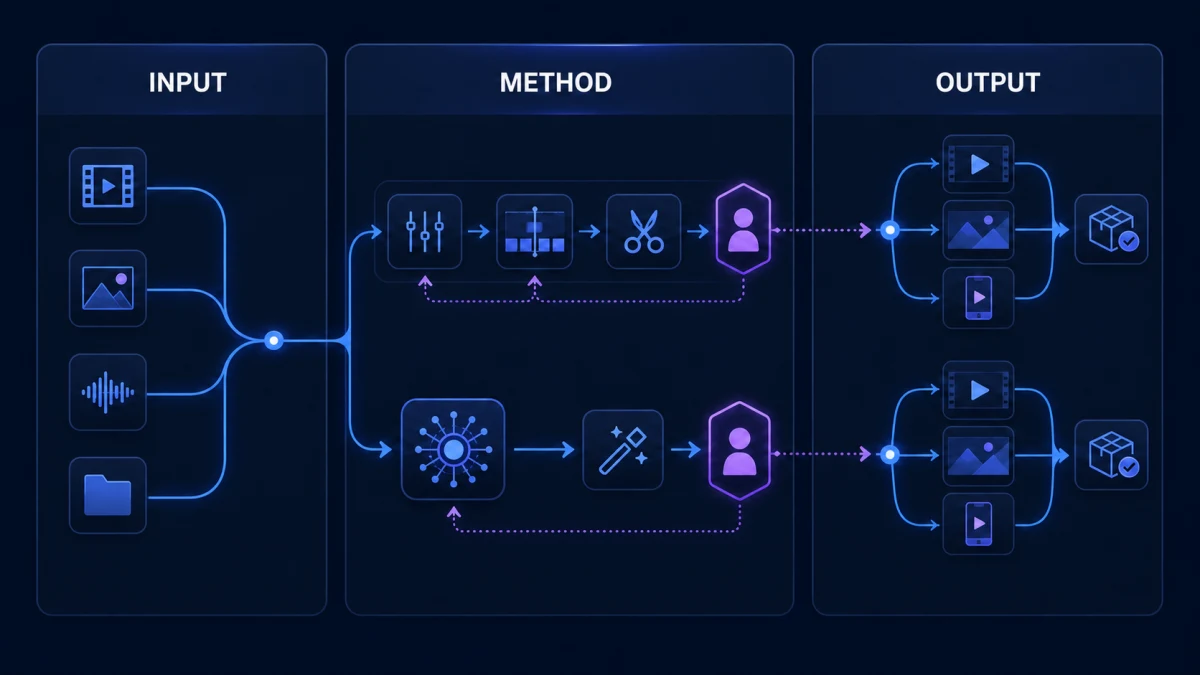
Before comparing tools or automating a workflow, write down:
- Time each stage from intake to approval, including waiting and review.
- Record false positives, missed moments, revisions, and specialist escalations.
- Separate one-time setup from repeatable per-asset work.
Also define the unit of success. Depending on the team, it may be one approved Short, one localized campaign package, one match recap, or one long-form episode delivered with editable assets. Generated candidates are inventory, not completed value.
Use a Weighted Scorecard
| Dimension | What to test | Evidence |
|---|---|---|
| Source handling | Real durations, codecs, channels, languages, and upload conditions | Successful ingest plus stable timecode |
| Editorial quality | Context, causality, identity, channel fit, and useful selection | Blind human scoring against source |
| Mechanical quality | Captions, crop, audio, graphics, format, and naming | Correction count and final-file QA |
| Collaboration | Roles, comments, versions, approvals, and external review | One complete review cycle |
| Governance | Rights, privacy, retention, security, auditability | Documented controls and owner |
| Interoperability | Editable export, relink, captions, metadata, and archive | Successful handoff to the next system |
| Economics | Labor, seats, compute, storage, transfer, support, and errors | Cost per approved deliverable |
| Outcome | Publish speed, completion, conversion, trust, or reuse | Channel and business metrics |
Weight the scorecard before the pilot. Otherwise, a striking demo feature can silently become more important than a non-negotiable requirement.
Full Workflow
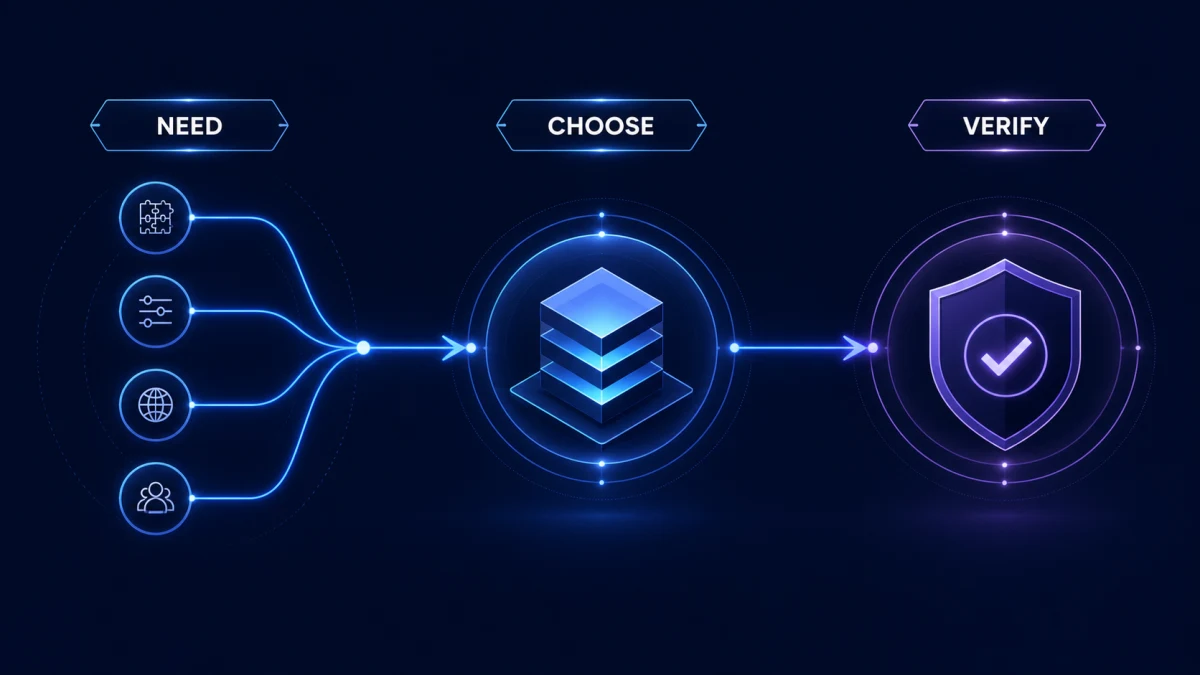
1. Define the unit of value
Use approved clip, localized version, finished recap, or campaign outcome—not raw generated candidates.
Define the evidence that closes this stage before the operator starts. Preserve source timecode and version, record exceptions, and route any claim, rights, identity, or safety uncertainty to the responsible human. A fast first pass is useful only when the next reviewer can understand why the candidate exists and how it was produced.
2. Build the manual baseline
Measure ingest, viewing, logging, selection, assembly, captions, crop, audio, graphics, review, revisions, export, and archive.
Define the evidence that closes this stage before the operator starts. Preserve source timecode and version, record exceptions, and route any claim, rights, identity, or safety uncertainty to the responsible human. A fast first pass is useful only when the next reviewer can understand why the candidate exists and how it was produced.
3. Run the same source through AI assistance
Keep brief, quality gate, reviewer, and deliverables constant. Record prompt and processing time.
Define the evidence that closes this stage before the operator starts. Preserve source timecode and version, record exceptions, and route any claim, rights, identity, or safety uncertainty to the responsible human. A fast first pass is useful only when the next reviewer can understand why the candidate exists and how it was produced.
4. Price all labor and infrastructure
Include editor, producer, reviewer, localization, legal, workstation, cloud compute, storage, transfer, support, and subscription.
Define the evidence that closes this stage before the operator starts. Preserve source timecode and version, record exceptions, and route any claim, rights, identity, or safety uncertainty to the responsible human. A fast first pass is useful only when the next reviewer can understand why the candidate exists and how it was produced.
5. Count correction cost
Track context repair, caption correction, reframing fixes, audio cleanup, export failures, and rejected candidates.
Define the evidence that closes this stage before the operator starts. Preserve source timecode and version, record exceptions, and route any claim, rights, identity, or safety uncertainty to the responsible human. A fast first pass is useful only when the next reviewer can understand why the candidate exists and how it was produced.
6. Model volume and utilization
Automation value changes with source length, repetition, seasonality, concurrency, and how often templates can be reused.
Define the evidence that closes this stage before the operator starts. Preserve source timecode and version, record exceptions, and route any claim, rights, identity, or safety uncertainty to the responsible human. A fast first pass is useful only when the next reviewer can understand why the candidate exists and how it was produced.
7. Include risk-adjusted cost
Estimate corrections after publication, rights incidents, brand damage, and missed deadlines where material.
Define the evidence that closes this stage before the operator starts. Preserve source timecode and version, record exceptions, and route any claim, rights, identity, or safety uncertainty to the responsible human. A fast first pass is useful only when the next reviewer can understand why the candidate exists and how it was produced.
8. Choose the operating mix
Automate stable high-volume steps; reserve human attention for meaning, exceptions, premium finishing, and approval.
Define the evidence that closes this stage before the operator starts. Preserve source timecode and version, record exceptions, and route any claim, rights, identity, or safety uncertainty to the responsible human. A fast first pass is useful only when the next reviewer can understand why the candidate exists and how it was produced.
Worked Example
A team produces 30 clips from four monthly webinars. Manual logging is expensive, while AI transcript search and candidate generation save time. However, 40 percent of candidates need context repair. After counting review, the best model is not fully automatic: AI narrows the source, a producer approves story units, and a template handles captions and exports.
The example shows why end-to-end elapsed time and correction rate matter more than generation speed. The most expensive failure may appear after the tool has technically completed its task: a wrong claim, missing setup, rights conflict, hidden crop, broken handoff, or version published to the wrong channel.
Build Human Review Around Risk
Not every output needs the same number of reviewers. Route work by risk.
- Low risk: format changes based on an already approved master, with no new claims or language.
- Moderate risk: new hook, clip boundary, crop, caption, or channel adaptation.
- High risk: regulated claims, customer testimony, minors, private data, unreleased material, new language, synthetic voice, or narrative reordering.
- Critical: uncertain rights, changed meaning, false attribution, safety instructions, or unsupported factual claims.
Automation can run the checks it performs reliably: missing fields, duration, aspect ratio, caption presence, naming, checksum, or destination package. Humans should own source meaning, narrative truth, voice, rights interpretation, exception handling, and final release.
Measure the Workflow, Not the Demo
Capture these measurements for every pilot job:
- source preparation time;
- upload or ingest time;
- automated processing time;
- operator prompting and search time;
- candidates reviewed;
- acceptance rate;
- context or factual corrections;
- caption, crop, audio, and graphics corrections;
- specialist review time;
- render, transfer, and upload time;
- failed or repeated exports;
- total time to approval; and
- outcome after publication.
Use the median for routine jobs and retain the worst case. Averages can hide one long source that blocks a release day.
Internal Workflows That Complete the Decision
Start by compare cloud and desktop deployment costs. Use that workflow where its decision becomes the next real constraint; do not add a tool merely because it is available.
Then assign AI and traditional editing responsibilities. Use that workflow where its decision becomes the next real constraint; do not add a tool merely because it is available.
Then apply the model to marketing repurposing. Use that workflow where its decision becomes the next real constraint; do not add a tool merely because it is available.
Then turn criteria into a procurement scorecard. This final handoff turns the local decision into a repeatable operating standard.
These connections should be contextual. A sports desk, drama marketer, gaming creator, and MCN may share infrastructure, but their editorial signals and release risks are not interchangeable.
How Recapo Fits
Recapo’s current AI video workflow tool can support candidate generation or production steps in this process. Use a representative source, preserve the original and transcript, and keep every accepted result tied to source timecode. Review current product behavior during the pilot rather than relying on a static feature checklist.
Automation remains a candidate generator until a responsible reviewer approves:
- source fidelity and complete context;
- names, numbers, terminology, and attribution;
- creator, character, player, or speaker identity;
- visual crop and evidence;
- captions and audio;
- rights, privacy, and disclosure;
- platform package and CTA; and
- the final encoded output.
Common Failure Modes
Comparing tool subscription with an editor’s full invoice.
This fails because it measures a visible activity rather than a publish-ready outcome. Correct it by returning to the source, isolating the failed assumption, and testing one representative job under the same acceptance criteria used for release.
Counting generated clips instead of approved clips.
This fails because it measures a visible activity rather than a publish-ready outcome. Correct it by returning to the source, isolating the failed assumption, and testing one representative job under the same acceptance criteria used for release.
Ignoring review and correction time.
This fails because it measures a visible activity rather than a publish-ready outcome. Correct it by returning to the source, isolating the failed assumption, and testing one representative job under the same acceptance criteria used for release.
Extrapolating a short pilot to long, noisy, multilingual sources.
This fails because it measures a visible activity rather than a publish-ready outcome. Correct it by returning to the source, isolating the failed assumption, and testing one representative job under the same acceptance criteria used for release.
Treating all editing hours as interchangeable.
This fails because it measures a visible activity rather than a publish-ready outcome. Correct it by returning to the source, isolating the failed assumption, and testing one representative job under the same acceptance criteria used for release.
Pilot Design
Run at least three jobs:
Normal job
Use the most common source and deliverable. This reveals day-to-day speed and usability.
Stress job
Use long duration, noisy or multichannel audio, several speakers, visual text, subtle context, multiple outputs, or a difficult codec. This reveals queue, quality, and handoff limits.
Exception job
Use a rights restriction, late source change, missing transcript, unusual language, urgent deadline, or failed export. This reveals whether the operating model can recover.
Freeze the acceptance criteria and reviewer group. Compare outputs blind where possible. Do not let one vendor receive more source context or manual cleanup than another.
Implementation After the Pilot
If the pilot passes, roll out in controlled steps:
- publish the intake contract and ownership map;
- approve prompts, templates, glossaries, and naming;
- set role permissions and retention;
- train operators on failures, not only the happy path;
- integrate source and approval records;
- set weekly quality and cost review;
- maintain an exception queue;
- re-test after material product or platform changes; and
- preserve a manual or alternate-path fallback.
Do not scale candidate volume before review capacity. A queue of unreviewed “almost finished” clips is work in progress, not productivity.
Final Checklist
Before choosing the tool or releasing the workflow, confirm:
- real representative long-form files were tested;
- the source, transcript, and rights record remain linked;
- every candidate retains verifiable timecode;
- context and identity were reviewed;
- captions, audio, crop, and graphics pass on the destination;
- roles and approvals are explicit;
- security, retention, and deletion meet requirements;
- editable handoff and archive were proven;
- correction labor is included in cost;
- normal, stress, and exception jobs were tested;
- total time to approved output improved; and
- the measured audience or business outcome matches the original goal.
Frequently Asked Questions
Is the tool with the most features the safest choice?
No. A smaller system that performs the highest-volume tasks reliably and hands off cleanly can create more value than a broad system with high correction cost.
Should automation replace the editor?
Treat automation as task allocation. It can remove search and mechanical labor while editors and producers spend more time on meaning, narrative, performance, exceptions, and release accountability.
How long should a pilot run?
Long enough to cover normal, stress, and exception jobs plus at least one full approval cycle. A fixed number of representative outputs is more useful than an arbitrary calendar period.
What metric matters most?
Cost and elapsed time per approved deliverable are strong operational metrics. Pair them with correction rate and the audience or business outcome; otherwise, a faster pipeline can simply publish weaker work.
Can one workflow serve every channel?
Share source governance, lineage, technical checks, and reusable assets. Keep editorial promise, hook, format, language, CTA, and risk review configurable by channel.
Conclusion
AI editing lowers cost most reliably in search, transcription, candidate generation, captions, reframing, cleanup, and repeated versions. Manual editing remains valuable for narrative judgment, complex finishing, rights, and exceptions. Compare total cost per approved asset, not the price or speed of the first draft.
A durable decision comes from a weighted scorecard, representative files, blind quality review, complete cost accounting, and an exit path. Optimize the system that delivers trusted outputs—not the screen that generates the most candidates.
References
- Recapo production tool, accessed August 26, 2026.
- Internal workflow references linked above, prepared for this Recapo editorial batch.