Recapo.ai
Recap & Faceless
Guides and articles from Recapo.ai for video editing, recap workflows, creators, and AI production.

Compare a plot summary, synopsis, and recap by purpose, audience, detail, spoilers, structure, and workflow, with examples and a practical decision guide.

Turn a full TV season into one coherent recap with episode maps, season arcs, character continuity, a runtime budget, scripting, editing, and QA.
Track characters, knowledge, relationships, locations, and time jumps in a movie recap with a continuity ledger, scene map, failure checks, and QA workflow.
Plan recap script word counts for 30-, 60-, and 90-second videos using narration pace, pauses, scene density, language, and a timed revision workflow.

Make an esports match recap by tracking objectives, economy, drafts, momentum, and win conditions. Follow a full scripting, editing, narration, and QA workflow.
Review an AI movie recap for story accuracy, scene evidence, pacing, voiceover, captions, rights, export integrity, and platform delivery before publishing.
Compare extractive and narrative video summaries by source fidelity, context, structure, effort, failure modes, and a hybrid workflow for each video type.
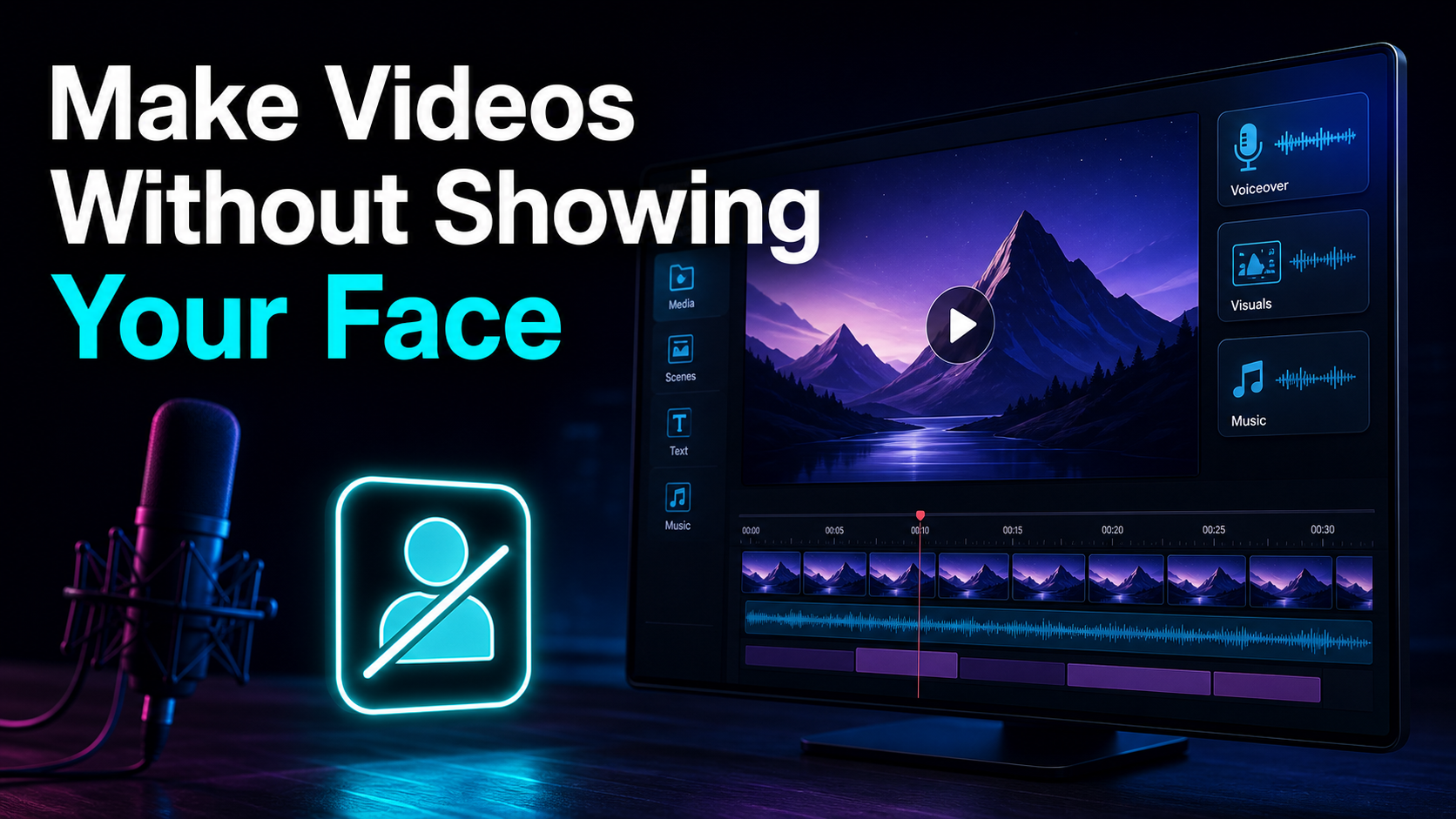
How to make a video without showing your face: a decision matrix matching your content type to the right faceless format, plus the steps to finish it.
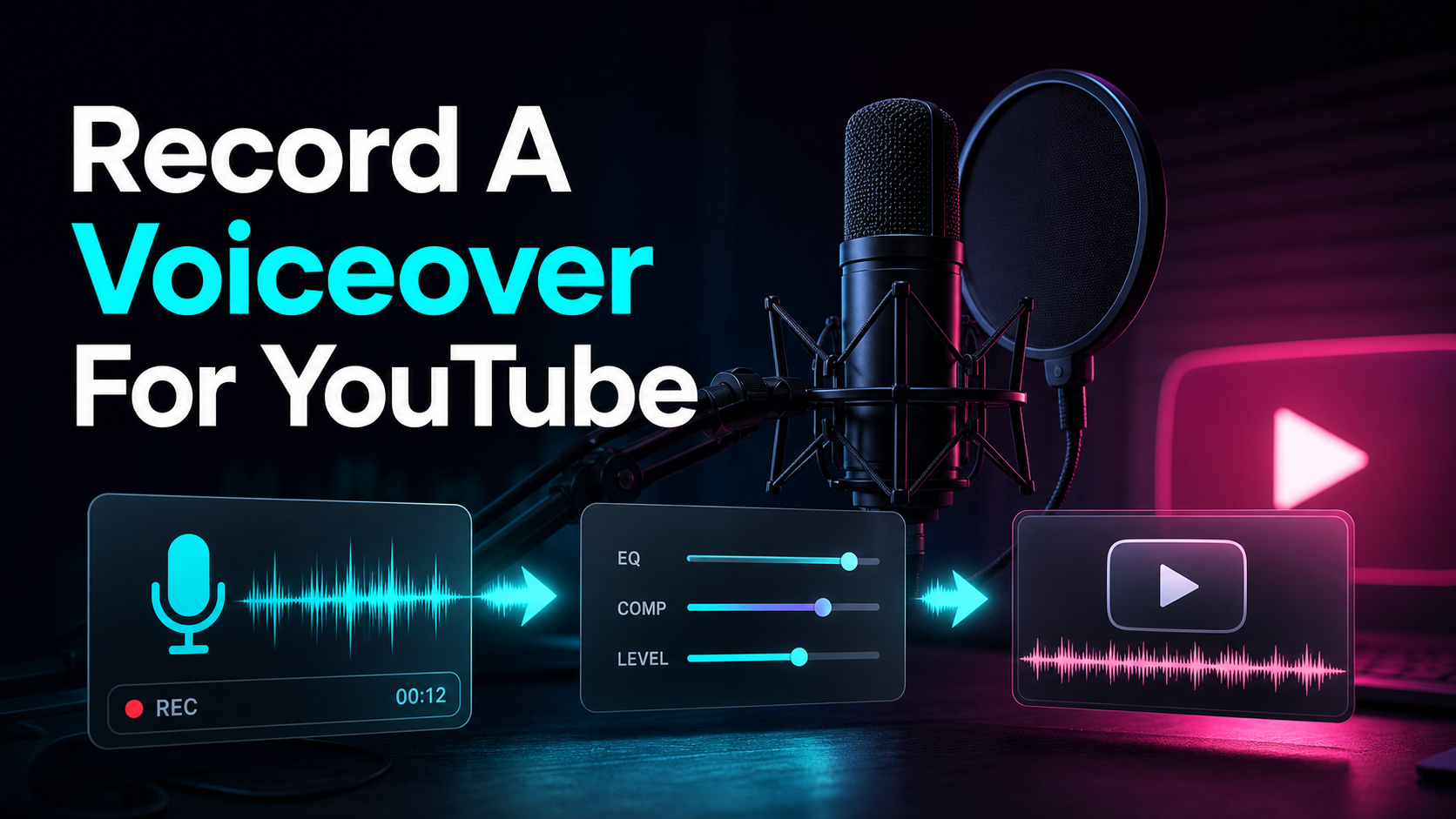
Record a YouTube voiceover with better room setup, mic technique, clean takes, noise control, captions, and a practical AI narration comparison.

Compare faceless video formats by revenue path, production effort, source rights, and repeatability, then test one idea with a small publishing batch.
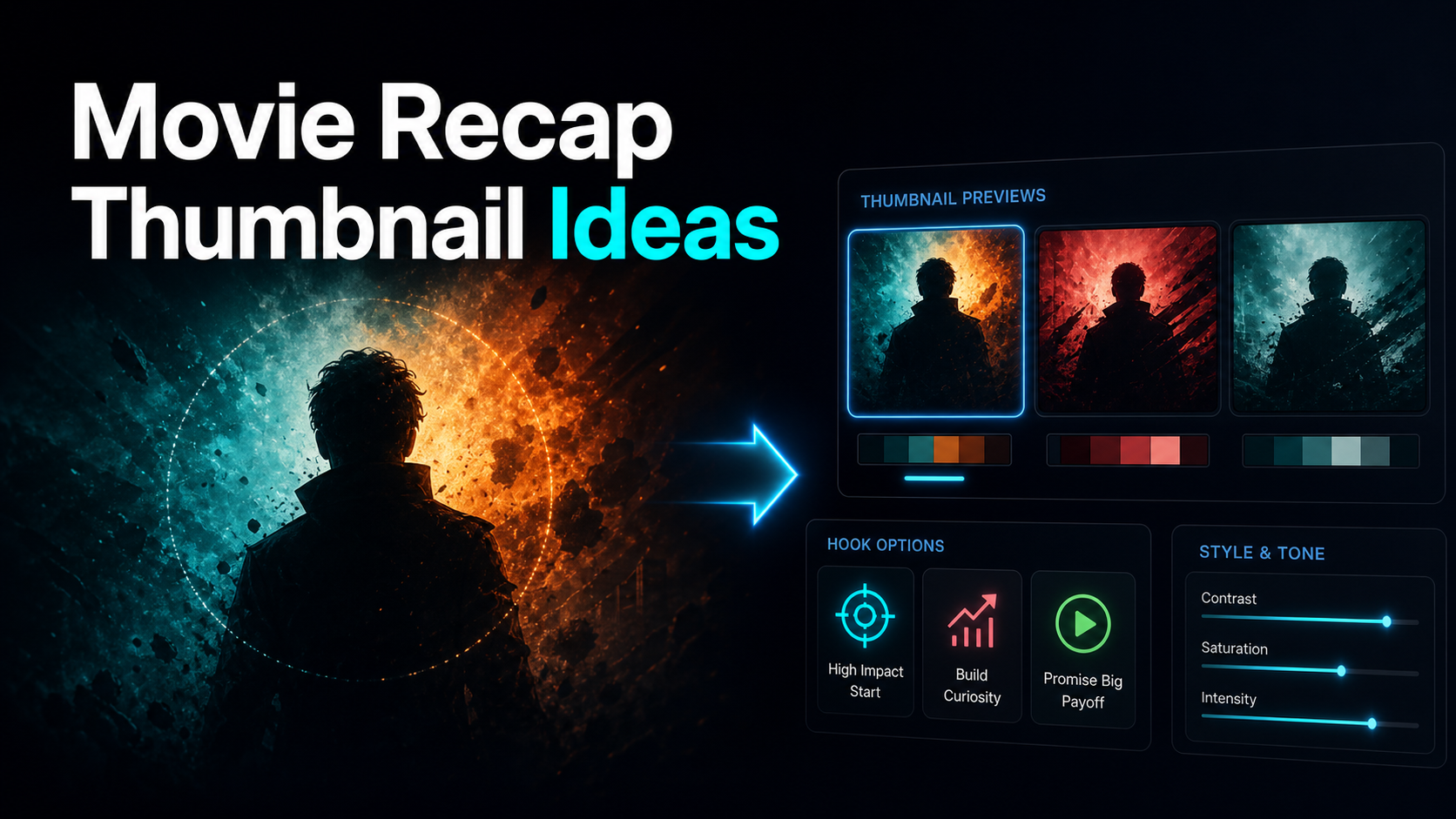
Design movie recap thumbnails with clear hierarchy, original graphics, tested text hooks, and properly licensed or otherwise permitted source imagery.
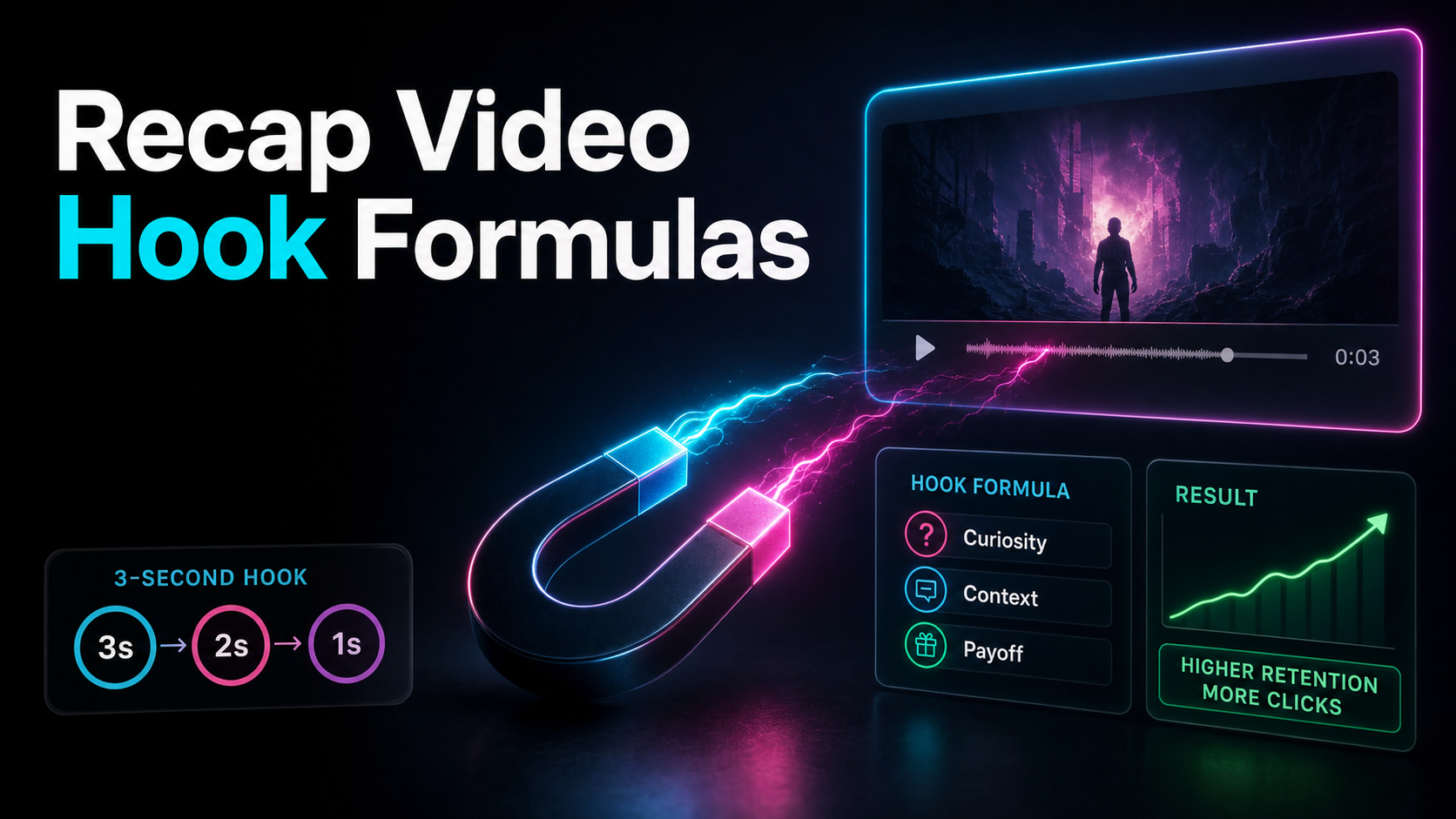
Use five recap-video hook structures, then test each against one audience promise without treating a fixed opening threshold as a guarantee.
Movie recaps can receive Content ID claims or copyright strikes. Learn the difference, response options, and a more defensible production workflow.

Choose a faceless recap niche by source availability, rights complexity, research load, audience fit, revenue paths, and a small publishing test.
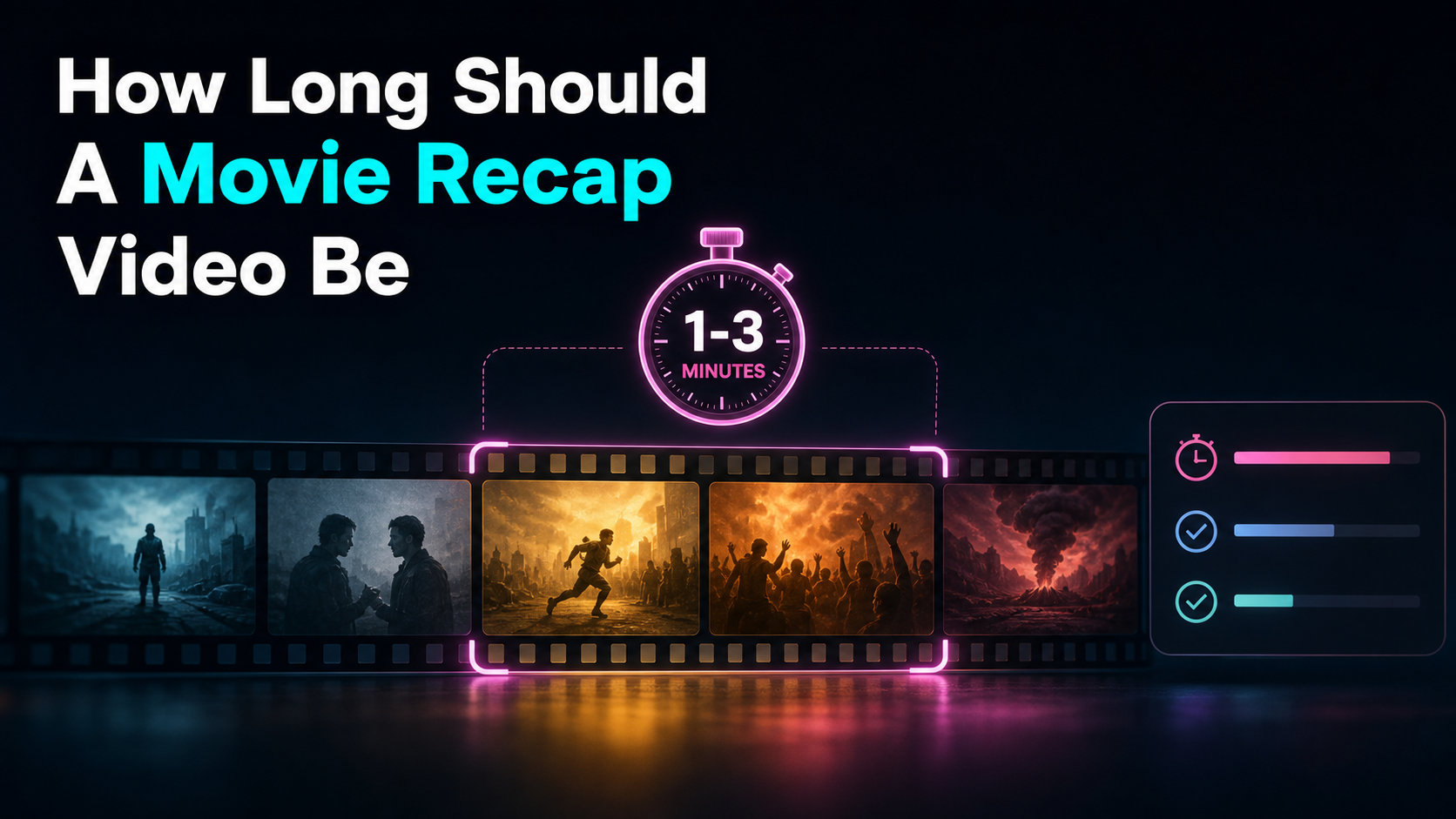
Choose a movie recap length from story scope, platform format, narration pace, and viewer intent, then calculate a practical script word budget.
Build a copyright-aware book summary video workflow for BookTube and BookTok, from source assessment and outlining to voiceover, visuals, and captions.
How to make a news recap video as a repeatable daily or weekly pipeline — aggregate, summarize, narrate, caption.
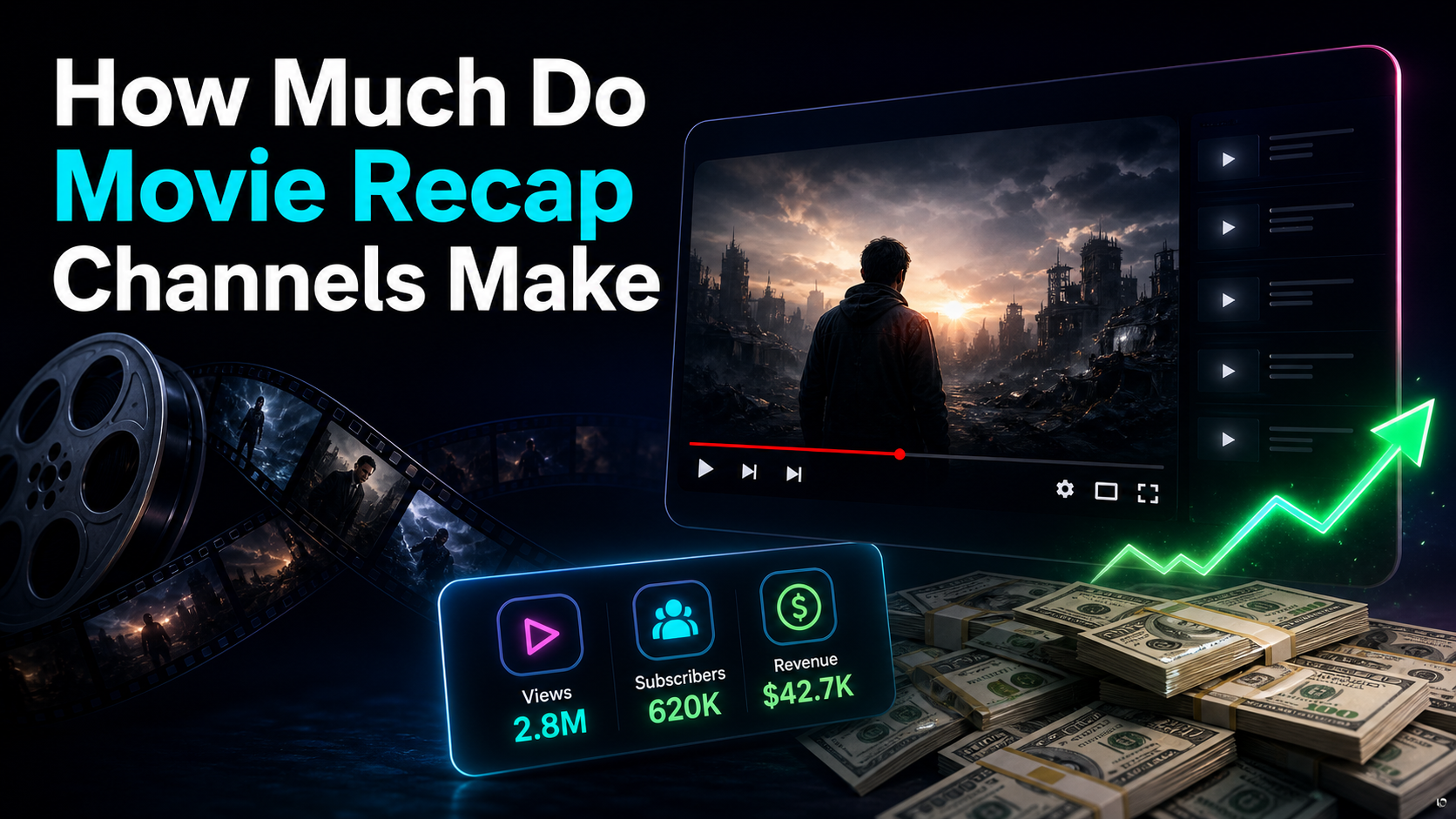
Understand movie recap channel income using YouTube's RPM definition, your own Analytics data, multiple revenue streams, and Content ID status.
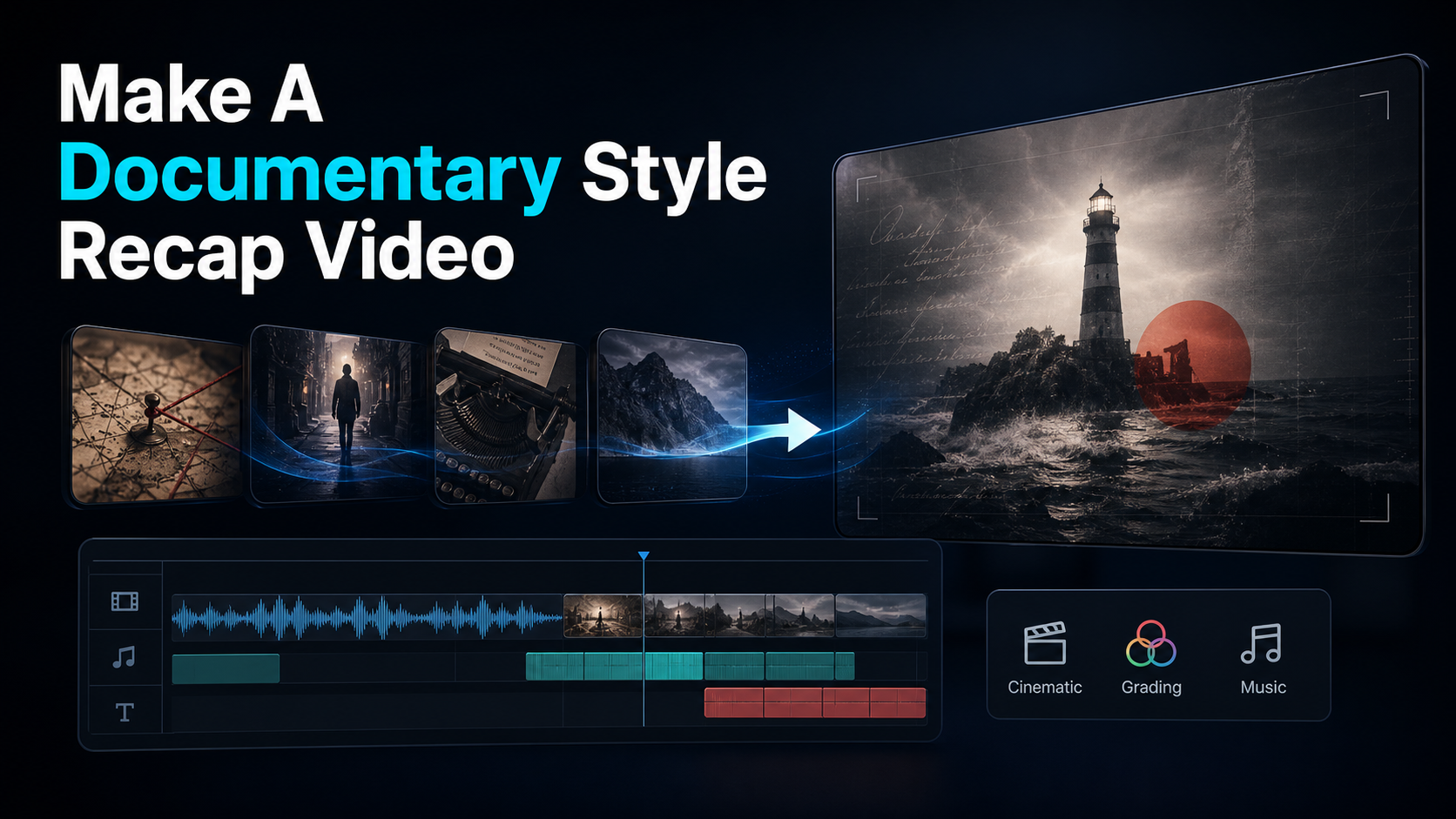
Make a documentary-style recap with sourced research, an original thesis, scene mapping, permitted visuals, steady narration, citations, and a fact check.
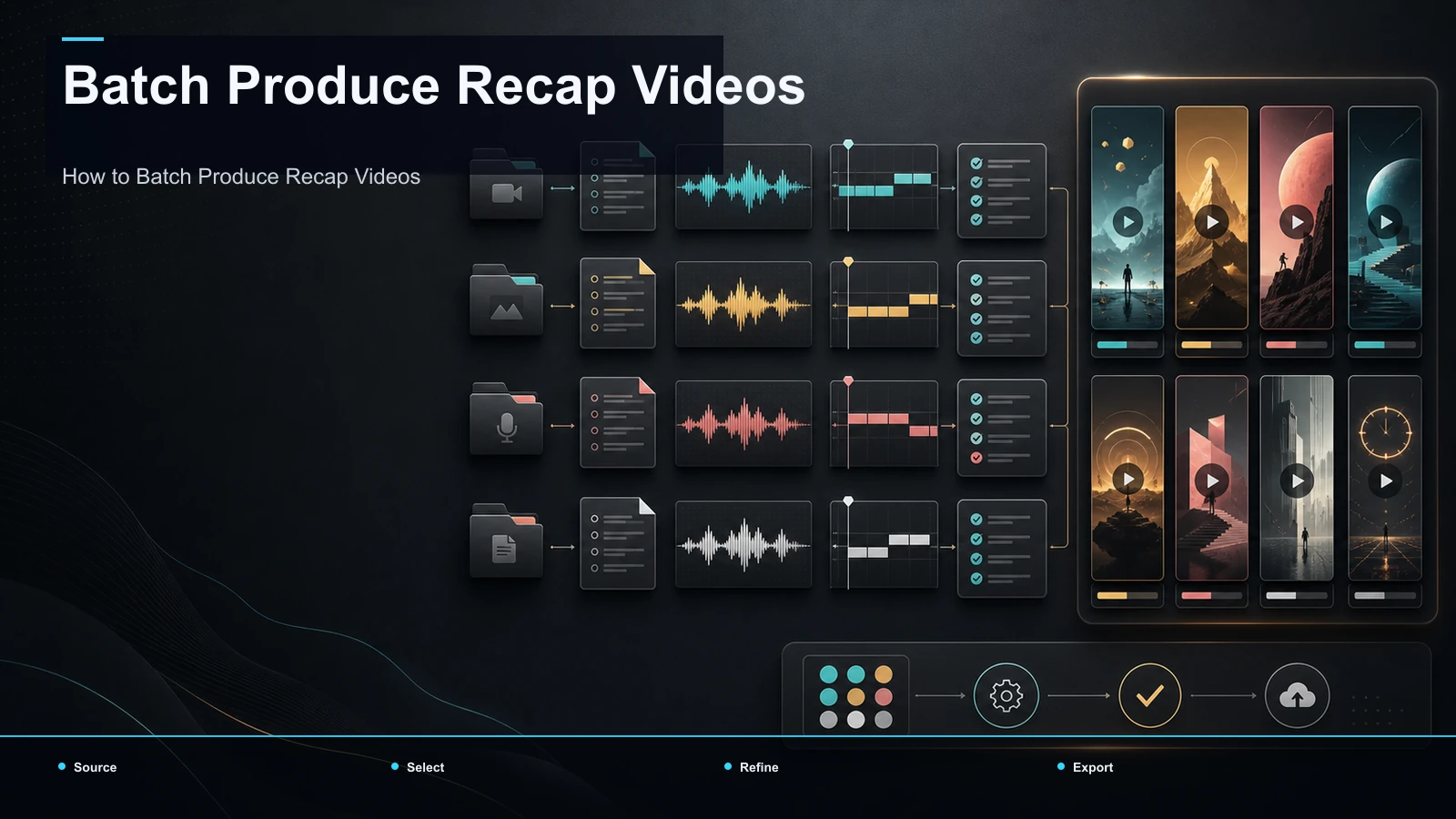
Batch-produce recap videos with a reusable template and a documented script, narration, clip, caption, review, and export workflow.
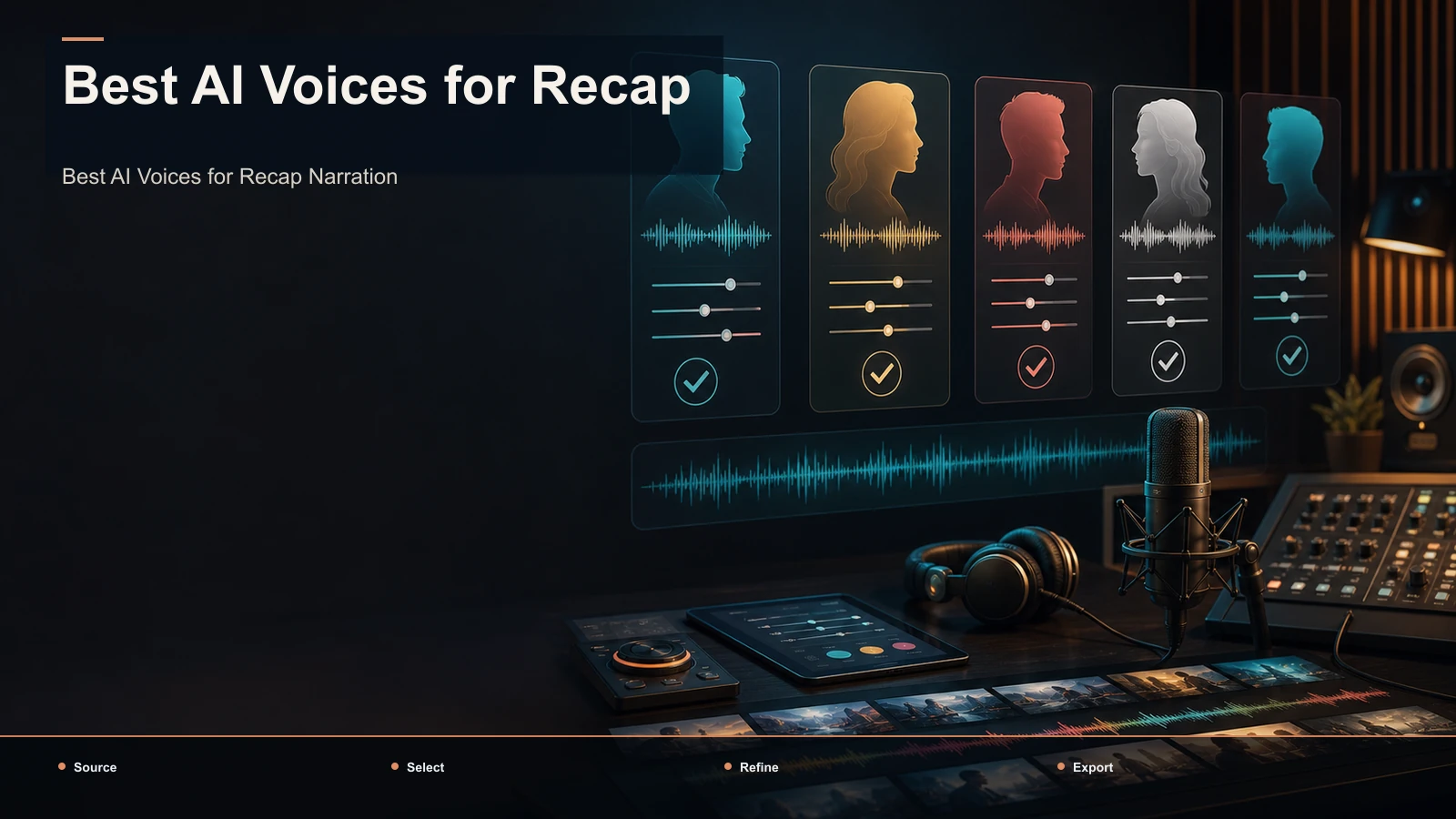
Choosing the best AI voices for recap narration? Pick by genre — true crime, thriller, documentary, anime — with script-prep tips and a same-script self-test.
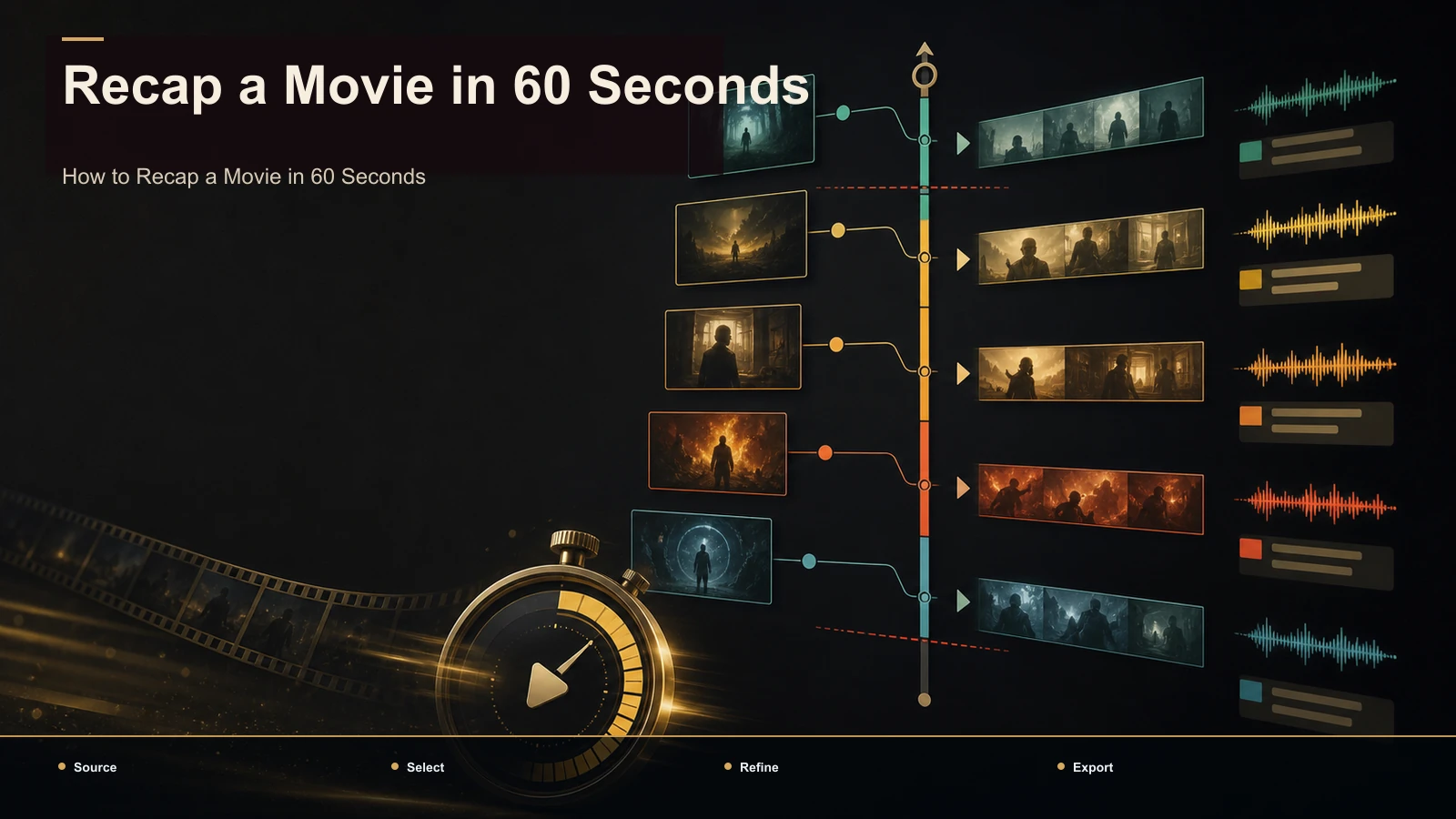
Build a 60-second movie recap with one editorial angle, 3–4 key beats, reviewed captions, a 9:16 layout, and a separate copyright check.
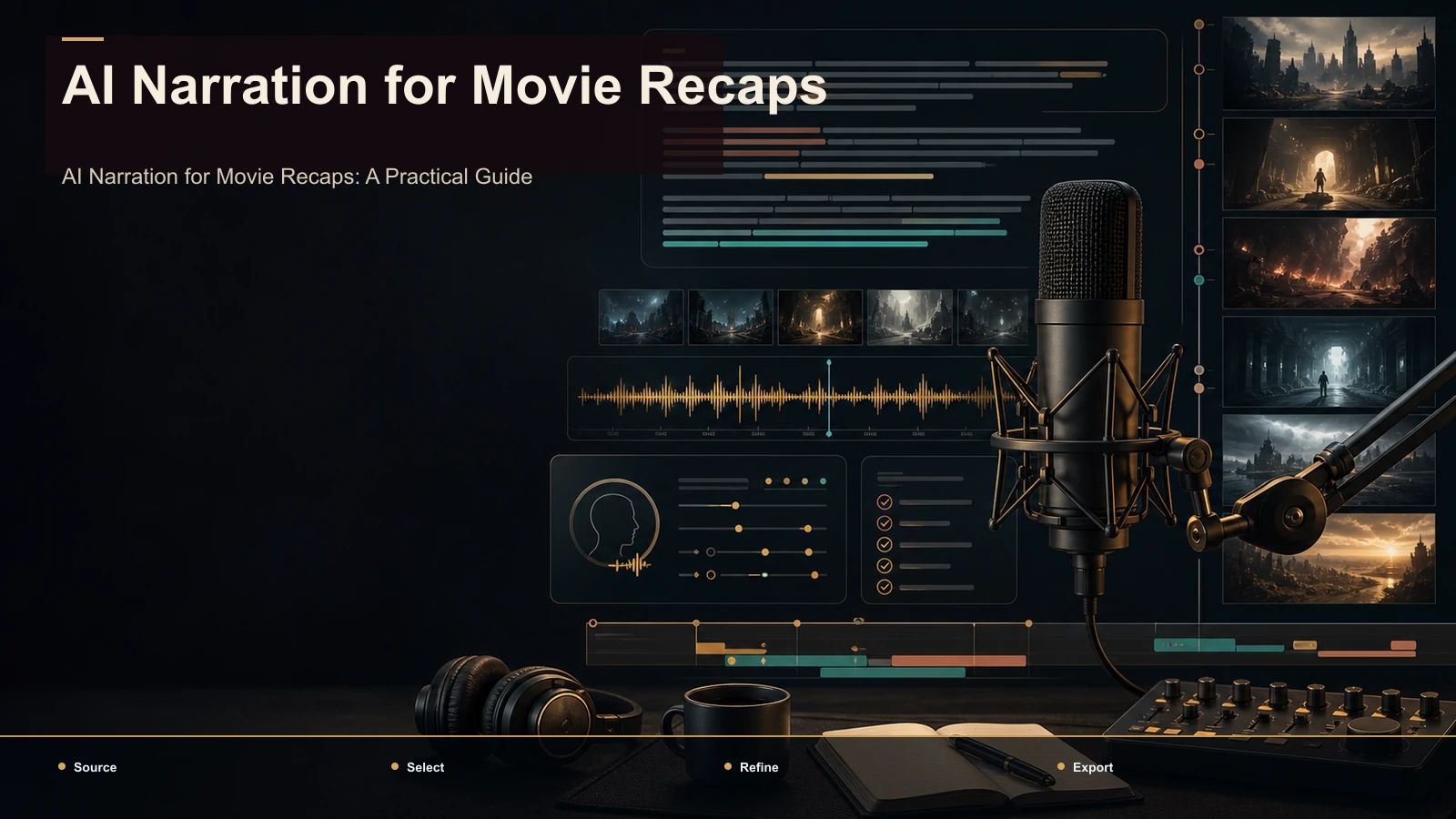
Test AI narration for movie recaps by voice consistency, comprehension at several speeds, pronunciation, caption accuracy, source rights, and export time.
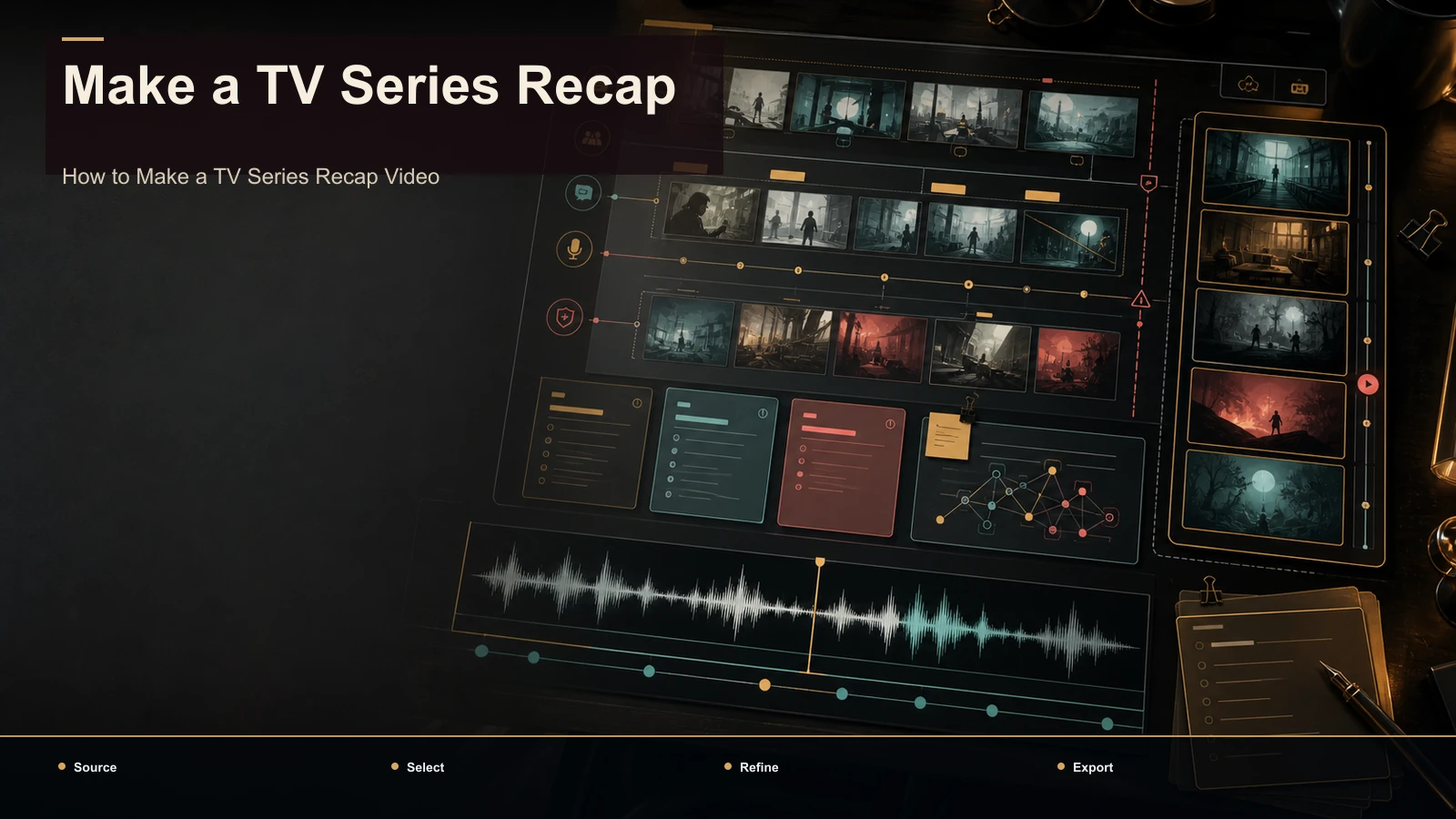
Make a TV series recap with episode or season structure, source records, original commentary, narration, captions, and a repeatable review workflow.
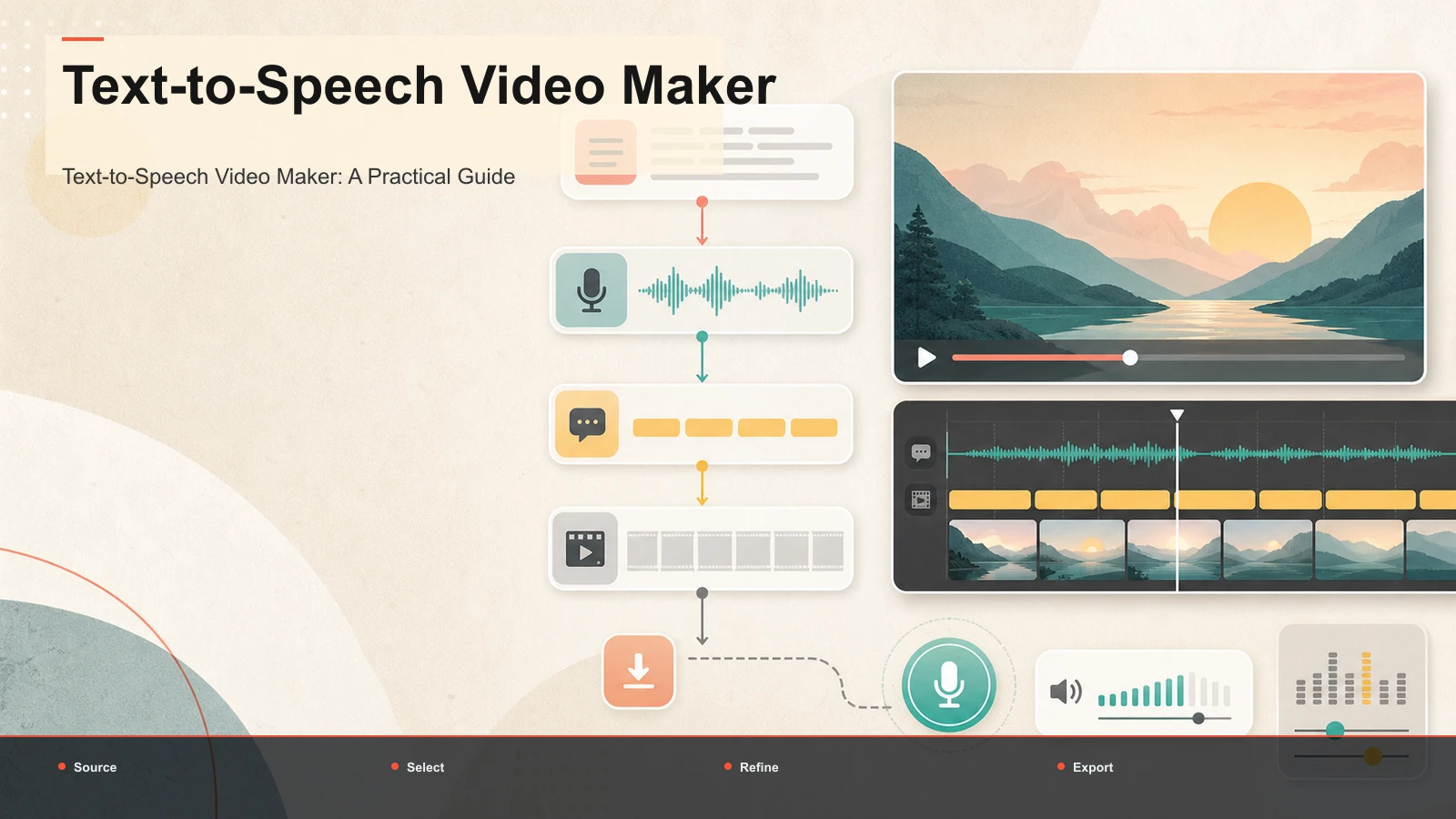
A practical text-to-speech video maker guide: take a script all the way to a finished video — voiceover, captions, vertical reframing, cover.
There's no single best AI voice for YouTube — choose by niche, test candidates on the same script, and check commercial licensing.
Faceless videos for affiliate marketing, built as a repeatable system — script, AI voiceover, captions, clips and disclosure — so you can scale reviews.
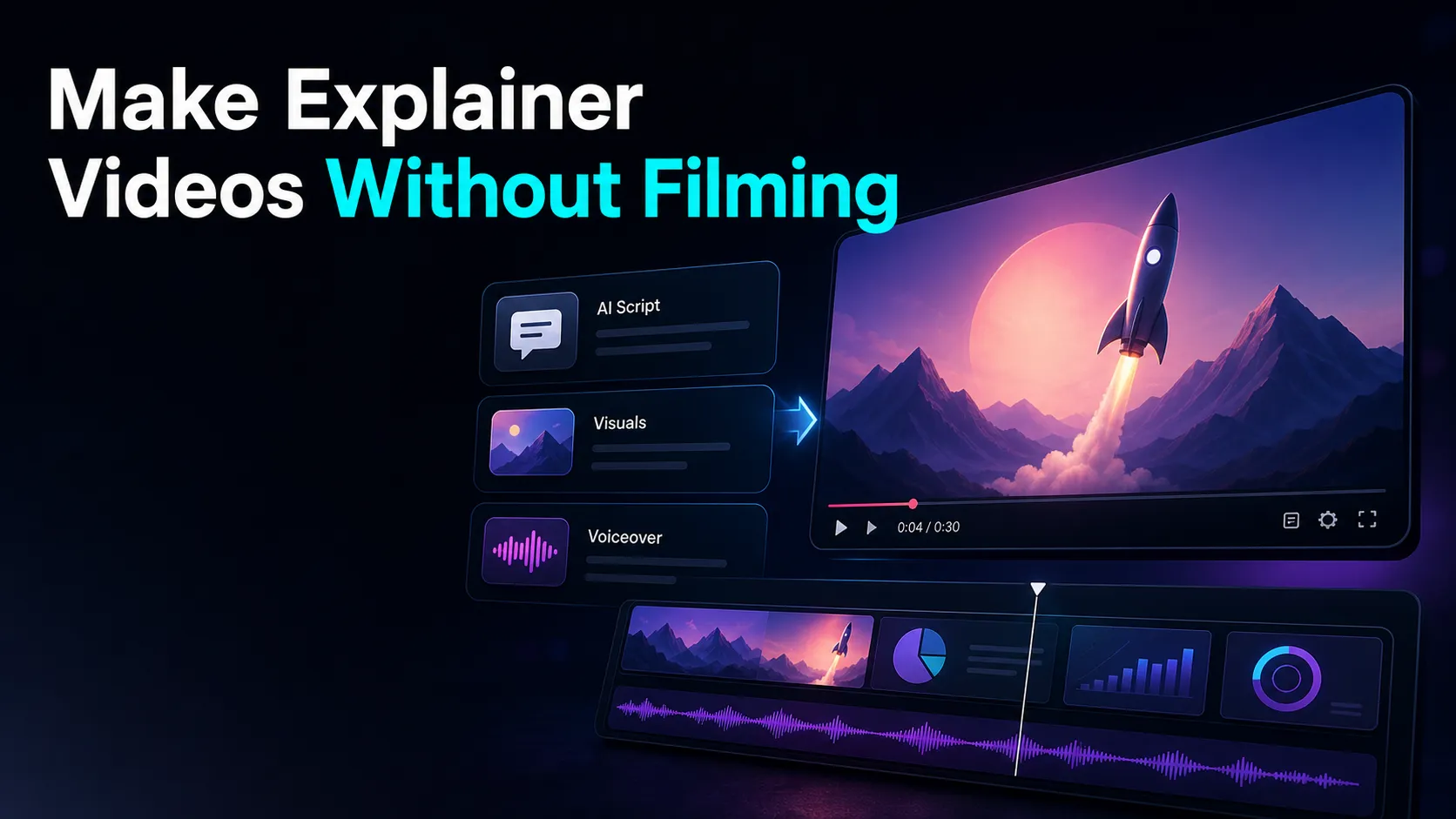
How to make explainer videos without filming: a script-first pipeline — a problem-to-CTA script, a film-free format, AI voiceover, and auto captions.

How to make an AI voice sound natural, not robotic: fix the script, control pauses, add emphasis, pick the right voice.

Review faceless YouTube revenue paths, current YPP eligibility, RPM in your own Analytics, source rights, and a repeatable production cost model.